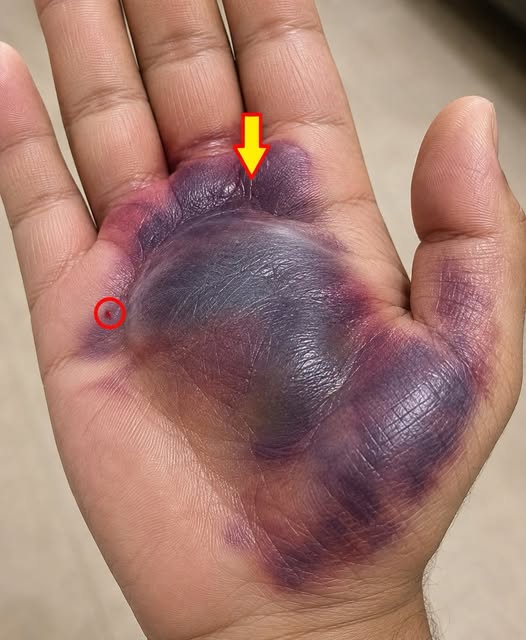
Let me tell you about the time I almost ignored a tiny scratch.
I was in my garden, pruning some rose bushes, when a thorn caught my finger. It was a small cut—hardly more than a scratch. I rinsed it off, put a bandage on it, and went back to work. I didn’t think twice about it.
A few days later, the area around the cut was red and warm. It was slightly swollen and tender to the touch. I assumed it was just healing. But the next morning, the redness had spread and there was a thin red streak traveling up my finger.
I went to the doctor, and she told me I had cellulitis—a bacterial infection that had entered through that tiny cut. She said if I’d waited another day, it could have become much more serious.
I was lucky. I caught it early enough to treat with antibiotics. But I’ve never ignored a small cut since.
In the vast majority of cases, small skin injuries heal without any problems at all. However, serious complications are uncommon—but they can happen. Recognizing the early warning signs can make all the difference.
The skin is the body’s first line of defense against bacteria, viruses, and other pathogens. When it’s intact, it does an excellent job of keeping harmful microorganisms out. But even a tiny break in the skin can be an entry point for infection.
How infections start:
Bacteria enter through a break in the skin (cut, scrape, bite, or burn)
The bacteria multiply in the warm, moist environment under the skin
The body’s immune system responds with inflammation
If the body can’t fight off the infection, it spreads
Who’s at higher risk:
Older adults (immune system function declines with age)
People with diabetes (poor circulation and slower healing)
People with weakened immune systems
People on certain medications (steroids, chemotherapy)
People with chronic skin conditions
Some redness around a wound is normal during healing. But if the redness starts to spread beyond the original area, it could be a sign of infection.
What to look for:
Redness that expands outward from the wound
A red streak traveling away from the wound (this can indicate a serious infection)
Redness that appears several days after the injury
Mild discomfort is normal. But if the pain gets worse over time—especially if it becomes throbbing or severe—that’s a warning sign.
Pain that increases instead of decreasing
Throbbing or deep aching
Pain that seems disproportionate to the size of the injury
Some swelling is a normal part of healing. But if the swelling worsens instead of improving, it could indicate an infection.
Swelling that expands beyond the wound area
